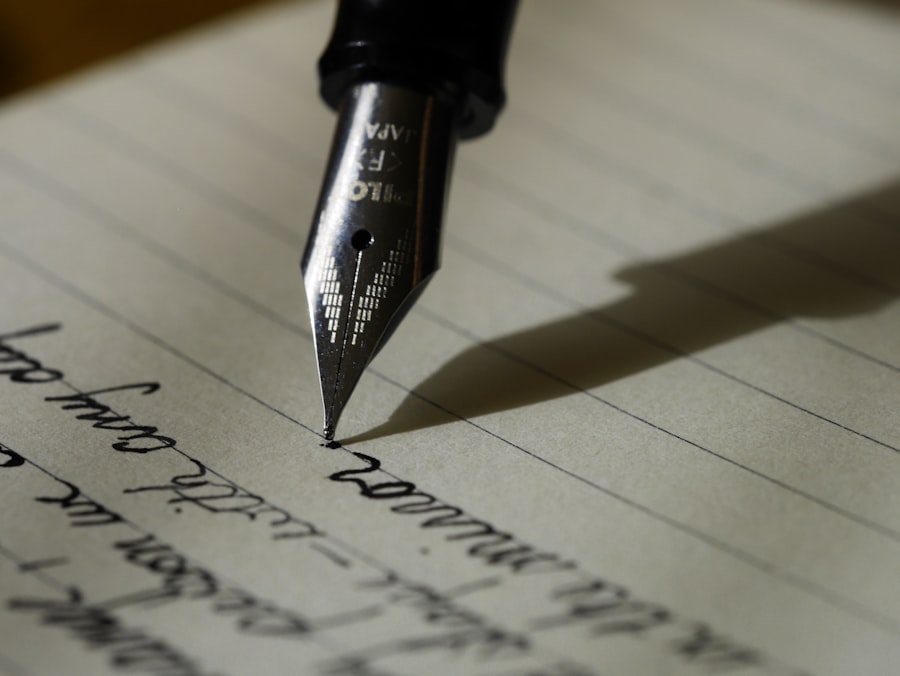
I bought a used copy of Montaigne two years ago specifically because it was full of someone else’s handwriting, and I have never regretted paying triple the price of the clean edition sitting next to it on the shelf. The margins are dense with a previous reader’s arguments, agreements, and at one point a genuinely furious dismissal of an entire essay, and reading Montaigne alongside this anonymous interlocutor has been one of the better reading experiences of my adult life.
A Stranger’s Disagreement
We have mostly decided, as a culture of readers, that marginalia is a defacement — that a “good” used book is a clean one, its previous owner’s presence erased as thoroughly as possible before resale. I think this gets the value of a book almost exactly backward. A clean copy gives you the author alone. A copy with margins gives you the author in conversation with at least one other mind that has already done the work of wrestling with the text, and left a record of the wrestling for you to read alongside it.

A Second Education
The best marginalia isn’t agreement — it’s friction. My Montaigne annotator disagreed with him constantly, in the margins of “On Cannibals,” with an argument sharp enough that I found myself reading the essay differently on the strength of a stranger’s disagreement written in blue ballpoint sometime, judging by the ink, in the nineteen-eighties. That’s not defacement. That’s a second education layered on top of the first one, free of charge, from someone who will never know I read their notes.
The best marginalia isn’t agreement — it’s friction.
Not Yet Finished
I’ve started leaving my own marginalia deliberately now, in books I intend to sell or give away eventually, on the theory that someone, someday, might want the argument as much as the text. It feels less like writing in a book and more like leaving a note for a stranger you’ll never meet but already, in some sense, know — because you’ve both spent real time in the same sentences, wrestling with the same author, at some determinable distance in time.
The clean copy is not, I’d argue now, the more valuable object. It’s the one nobody has finished reading yet.
- Jackson, H.J. (2001). Marginalia: Readers Writing in Books.
- Montaigne, M. de (1580). Essais.